 RSS Feed
  Monday, May 4, 2026 : 12:44 (+4GMT) Monday, May 4, 2026 : 12:44 (+4GMT) | |||
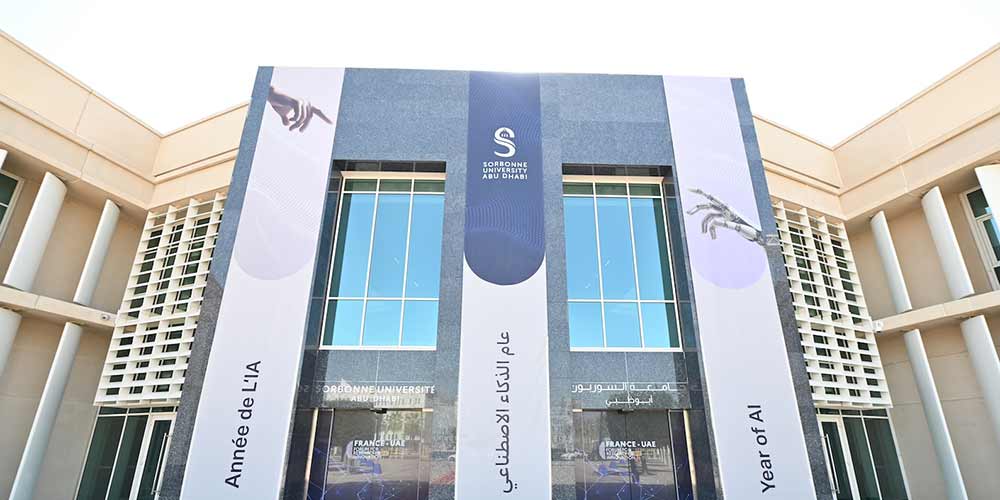
Abu Dhabi, UAE, 4 May 2026: Sorbonne University Abu Dhabi (SUAD) successfully concluded its annual Integrity Week, held in April 2026, reinforcing academic integrity as a defining principle of its teaching and its student experience, alongside its focus on academic excellence and holistic student development. More than a standalone initiative, Integrity Week reflects the University's broader mission to cultivate critical thinkers and future leaders, capable of engaging responsibly with knowledge in an increasingly complex and technology-driven world. This year's edition, aligned with SUAD's 'Year of AI', explored artificial intelligence, not just as a tool but as a subject of critical inquiry. This approach also aligns with the vision of the United Arab Emirates, where His Highness Sheikh Mohamed bin Zayed Al Nahyan, President of the UAE, has emphasised the importance of the responsible use of artificial intelligence, reflecting the country's commitment to advancing innovation grounded in values and ethics. During the week, students engaged with artificial intelligence in its broadest sense, with a particular emphasis on applied AI. Moving beyond technical foundations, the programme explored how AI is actively reshaping disciplines across academia, industry and society. This multidisciplinary approach enabled students to understand AI not in abstraction, but as embedded within contemporary knowledge systems and societal contexts. Importantly, the programme also highlighted that the principles governing its ethical use such as critical thinking, intellectual rigor, and integrity are not new. They remain long-standing foundations of academic practice and continue to guide scholarly work in the age of artificial intelligence. The week culminated in the signing of the Integrity Pledge, marking a deliberate shift from awareness to personal accountability. By committing in writing, students affirmed their adherence to academic honesty, intellectual independence, and the responsible use of AI tools. The pledge serves both as a symbolic milestone marking the completion of the programme and as a practical reminder of the standards expected throughout their academic journey. To bring these principles into practice, the programme incorporated applied, discipline-specific experiences. A notable example was an urban planning workshop led by the Department of Geography in collaboration with the SUAD Library, with Dr. Simone Safe, Head of Programme in Geography and Planning supporting its pedagogical design. As part of the exercise, first-year Geography students examined mobility and public space in Downtown Abu Dhabi, focusing on the Al Hosn and Hamdan Street area. Working in two groups, they adopted contrasting research approaches - one grounded in academic literature and library resources, and the other driven by AI tools such as ChatGPT, Gemini, and Claude. The objective was not simply to generate solutions, but to critically evaluate the reliability, depth, and real-world applicability of each method. While students proposed a range of urban interventions, from improved walkability and green spaces to enhanced safety and accessibility, the exercise revealed a clear distinction. AI tools accelerated idea generation but often lacked contextual nuance and analytical depth. The outcome reinforced a central tenet of Integrity Week - technology can support knowledge creation, but it is disciplined inquiry and critical judgement that give it meaning. Professor Nathalie Martial-Braz, Chancellor of Sorbonne University Abu Dhabi, said: 'Integrity Week proudly reflects our commitment to developing students as thoughtful and responsible individuals. Through critical reflection and real-world case studies, they engage with the ethical dimensions of knowledge, including the growing impact of artificial intelligence. We are proud to see our students apply this thinking in practice, demonstrating that while AI can support learning, it cannot replace critical thinking, contextual understanding, and academic rigor.' This year's Integrity Week featured daily modules combining videos, podcasts, and interactive activities, designed by professors from Sorbonne University Abu Dhabi and AI experts, and formed a mandatory component for students ahead of their examinations. Through this, the initiative further reinforced intellectual rigor, ethical awareness, and a strong sense of responsibility; qualities that continue to define Sorbonne University Abu Dhabi graduates.
| |||
|
| |||
| |||
| |||
| |||
| ||||||||||||||||||||||||||||||||
| ||||||||||||||||||||||||||||||||
| ||||||||||||||||||||||||||||||||