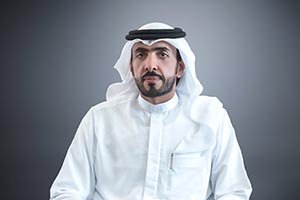
October 13, 2026: H.E. Dr. Ahmad Saeed bin Meshar, SLC Secretary General, asserted that the General Secretariat of the Supreme Legislation Committee (SLC) in the Emirate of Dubai is advancing a forward-looking legislative approach that anticipates emerging trends, supports innovation and strengthens the foundations of a competitive, resilient and sustainable economy.
H.E. Bin Meshar said that in a world defined by rapid technological transformations and shifting economic dynamics, innovation is no longer merely a competitive advantage; it has become a fundamental determinant of competitiveness, resilience, and sustainable development. “For nations seeking to thrive in an increasingly complex global economy, the ability to anticipate change, embrace new opportunities and translate ideas into tangible outcomes has become essential,” he added.
H.E. noted that the UAE has never been a nation that waits for the future; rather, it has long shaped it and continues to do so. Guided by the vision of its wise leadership, our nation has placed innovation, economic diversification and sustainable development at the heart of its long-term ambitions.
H.E. emphasised that a critical enabler of this vision is a legislative ecosystem that can anticipate future developments, respond to evolving needs and create the conditions in which new ideas can flourish. Legislation, H.E. said in this context serves as the shield that protects innovation and enables it to grow, thrive, and contribute to the modern economy. Without a flexible and future-ready legislative ecosystem that can align with emerging technologies, innovation would remain merely an unrealised idea without practical application.
H.E. said that this understanding has guided the work of the General Secretariat of the Supreme Legislation Committee (SLC), which has adopted a proactive legislative vision that does not merely keep pace with developments, but seeks to anticipate them and establish the appropriate regulatory framework to support them.
This approach, H.E. noted is reflected in seven key initiatives designed to embed future readiness across Dubai’s legislative ecosystem. Together, these initiatives have made future readiness an integral part of the legislation-making process.
H.E. said, “At the heart of SLC’s forward-looking legislative approach is the recognition that emerging technologies require appropriate legal frameworks before their full potential can be realised. Through the ‘TRENDS Legislative Intelligence Platform’, the SLC General Secretariat monitors future signals, identifies emerging trends and key drivers of change, develops potential scenarios, and proposes proactive draft legislation.”
“This forward-looking approach has now extended to include ‘Proactive Legislation for Emerging Sectors’, through which local legislation is being issued ahead of the maturity of its respective sectors, thereby completing the picture and amplifying its impact. These include Law No. (4) of 2020 Regulating Unmanned Aircraft in the Emirate of Dubai, Decree No. (24) of 2021 Regulating the Use of Three-dimensional Printing in Construction Works in the Emirate of Dubai, Law No. (4) of 2022 Regulating Virtual Assets in the Emirate of Dubai, Law No. (9) of 2023 Regulating the Operation of Autonomous Vehicles in the Emirate of Dubai, and other legislation that strengthens Dubai’s position as a global hub for innovation and entrepreneurship,” H.E. added.
H.E. Bin Meshar highlighted the importance of ‘Business Environment and Entrepreneurship Legislation’, noting that entrepreneurs were key drivers of economic growth and diversification. “A number of legislative instruments were issued to support this sector and enhance its competitiveness, including Decree No. (13) of 2024 Establishing the Unified Digital Window for Establishing Companies in the Emirate of Dubai, Executive Council Resolution No. (5) of 2024 Approving the Principles of Facilitating the Investor’s Journey in the Emirate of Dubai, and Executive Council Resolution No. (11) of 2025 Regulating the Conduct of Free Zone Establishments within the Emirate,” H.E. added.
H.E. added that the UAE’s performance in the Global Innovation Index 2026 reflected the importance of a supportive regulatory and business environment. According to the Global Innovation Index 2026, the UAE ranked first globally in entrepreneurship policies and culture and second globally in the business environment. The country also ranked ninth globally in the institutions pillar, which measures the regulatory environment and the business environment. Such indicators highlight the relationship between a supportive business climate and the wider innovation ecosystem.
H.E. explained that the SLC General Secretariat had established mechanisms to engage government entities and other stakeholders in the legislative process. Since 2018, seven Legislative Labs have been held by SLC, bringing together 1,200 participants from 32 government entities. These labs generated 1,274 ideas, of which 62 were implemented, while the remaining ideas are still under development and undergoing regulatory testing.
H.E. noted that this collaborative model is complemented by a focus on assessing the effectiveness of legislation after its enactment. In relation to ‘Legislative Impact Assessment and Legislative Audit’, the Executive Council of Dubai approved the Legislative Impact Policy developed by the SLC. In 2025, the SLC General Secretariat issued 61 legislative compliance audit reports covering 52 government entities in the Emirate of Dubai.
“We also understand that a future-ready legislative system must be efficient and responsive. Therefore, under the SLC General Secretariat’s Legislative Issuance Cycle Acceleration initiative, the average time required to issue legislation has been consistently reduced from 177 working days in 2019 to 73 working days in 2025, exceeding the target of 74 working days. This progress reflects efforts to improve processes and strengthen the responsiveness of Dubai’s legislative system,” H.E. said.
“At the same time, digital transformation has expanded access to legislative information and supported the development of institutional capabilities. As part of its Digital Transformation and Capacity-Building initiative, the SLC developed the Dubai Legislation Portal under the Dubai 10X initiative. The portal facilitates access to legislative information, helping users navigate the emirate’s legal framework and enhancing access to legislative knowledge. The General Secretariat has also introduced initiatives designed to develop expertise and promote a stronger culture of legislative excellence, including the Legislative Conference, the Legislative Week and the Legislative Drafting Diploma Programme, which is delivered in partnership with the Dubai Judicial Institute,” H.E. added.
H.E. Bin Meshar further stated that these initiatives point to a broader understanding of modern governance: the effectiveness of a legislative framework depends not only on the legislative instruments themselves, but also on the systems, skills and processes through which they are developed, communicated and implemented.
H.E stated that these achievements have not come about by chance; rather, they are the product of a comprehensive and integrated institutional effort. The number of local legislative instruments issued rose from 49 in 2015 to 373 in 2025, demonstrating the accelerating pace of legislative activity.
“While local legislation plays a vital role in regulating emerging sectors and responding to Dubai’s specific priorities, the wider federal legal framework provides an essential foundation for innovation across the UAE. Among the key legislative instruments are Federal Law No. (11) of 2021 Concerning the Regulation and Protection of Industrial Property Rights, Federal Decree-Law No. (38) of 2021 Concerning Copyright and Neighbouring Rights, and Federal Decree-Law No. (36) of 2021 Concerning Trademarks. These instruments provide the necessary legal protection for creators and innovators.
Other key legislative instruments include Federal Decree-Law No. (32) of 2021 Concerning Commercial Companies, as amended, and Federal Decree-Law No. (51) of 2023 Issuing the Financial Restructuring and Bankruptcy Law. Together, these legislative frameworks contribute to a flexible, supportive and business-friendly environment. Equally important is the UAE’s evolving legal framework governing electronic transactions and trust services, personal data protection, and trade through modern technological means. These laws keep pace with digital transformation while safeguarding the rights and interests of individuals and businesses,” H.E. said.
H.E. said that these achievements have also been reinforced by strategic partnerships and agreements that advance the work of the SLC and deepen coordination and cooperation with the Federal Government. Notable examples include the Memorandum of Understanding (MOU) signed with the Legislation Laboratory at the General Secretariat of the Cabinet, in partnership with the Dubai Future Foundation, as well as the MOU with the Ministry of Economy and Tourism. Both agreements seek to enhance cooperation in the areas of legislative development and support a conducive environment for business and innovation.
H.E. said that the UAE's achievements in innovation and legislation demonstrate to the world that the future belongs not to those who wait for it, but to those who shape it through vision, determination and hard work.
H.E. Bin Meshar reaffirmed that SLC’s proactive approach and forward-looking vision have reinforced the principle that legislation is not an obstacle to innovation, but its safeguard and enabler. It provides a solid foundation for foresight and future readiness, enabling us to move forward with confidence towards greater creativity and innovation for the benefit of humanity.