Industry leaders have highlighted changing buyer expectations, supply chain pressures and the evolving relationship between analogue, digital and lifestyle products
Paperworld Middle East takes place at the Dubai World Trade Centre from 13-15 October 2026
Dubai, UAE: Sustainability, pressure on prices and supply, and a growing crossover between stationery, gifting, and lifestyle products are emerging as key factors shaping the international paper and stationery industry, according to exhibitors participating in Paperworld Middle East 2026 taking place from 13-15 October at Dubai World Trade Centre.
The insights point to a market where manufacturers are increasingly balancing competitive pricing with growing expectations around materials, supply reliability, design and product differentiation. From a sustainability perspective, purchasing decisions are shifting, with buyers placing more importance on responsible sourcing, recycled materials, and waste reduction alongside price, quality, and performance.
Kartik Gopal, AVP – International Business, Hindustan Pencils, India’s largest pencil manufacturer with a global presence across 50+ countries producing over 8.5 million pencils daily, said: “Buyers and retailers increasingly view responsibly sourced wood, recycled plastics and non-toxic materials not as differentiators, but as standard expectations. Meanwhile, price sensitivity amid raw material volatility remains a challenge, with plastic input costs fluctuating with crude oil prices.”
While sustainability and product development are reshaping demand, rising input and logistics costs remain a key commercial challenge. In 2026, disruptions related to port congestion and higher fuel costs continue to put pressure on global freight rates.
In 2026, port congestion, disruptions to shipping routes and higher fuel costs have continued to put pressure on global freight rates. GiGiS International, a leading UAE-based premium stationery brand exporting to 40+ markets and producing more than 2.5 million pens daily, also commented on rising raw material costs. Its Operations Lead, Justin Abraham, identifies product innovation, premium offerings, e-commerce and expansion into emerging markets as key areas of opportunity.
Together, these pressures are changing how buyers assess value. Price remains important, but quality, durability, design, availability, and supplier reliability carry greater weight in purchasing decisions. That tension is particularly apparent in writing instruments, where manufacturers compete on both cost and design.
Praveen Bafna, Managing Director of Saino Pen & Plastic, an established Indian stationery manufacturer specialising in writing instruments and plastic products, said: “The writing instruments industry is becoming increasingly design-driven while remaining highly competitive on price. Buyers are seeking products that combine quality, affordability and attractive aesthetics, while also expecting faster product development and greater flexibility from suppliers. At the same time, supply chain resilience, sustainability and the continued growth of private label brands are creating new opportunities. Manufacturers that can consistently deliver quality, innovation and reliability will be best positioned for long-term success.”
Beyond pricing and supply pressures, the stationery category is also broadening, as products traditionally associated with school and office use increasingly extend into creativity, personalisation, gifting and lifestyle. Global Market Insights values the art and creative supplies segment at US$19 billion in 2025 and identifies it as the fastest-growing product segment within the wider stationery market, while separate 2026 research forecasts continued growth in premium stationery, supported by gifting, customisation and limited-edition products.
Walter Yu, Head of Global Department at MORRIS, a prominent South Korean manufacturer of pens and writing instruments, said: “Stationery and gifts sectors are combining more with lifestyle, gifts and toys. They’re cross-pollinating to meet the demands of consumers, whose trends are ever-changing.”
Together, the exhibitor insights show how priorities across the sector are changing. Physical and digital products are developing alongside one another; sustainability is becoming intertwined with procurement decisions; and manufacturers are being challenged to deliver stronger design and greater value without compromising reliability.
Mark Palmer, Show Director, Paperworld Middle East, said: “Buyers are balancing sustainability, quality and competitive pricing with the need for dependable supply, while changing consumer habits continue to reshape the market. Paperworld Middle East provides the opportunity to see these shifts first-hand, compare different approaches and identify the products and partnerships that will influence sourcing decisions for the year ahead.”
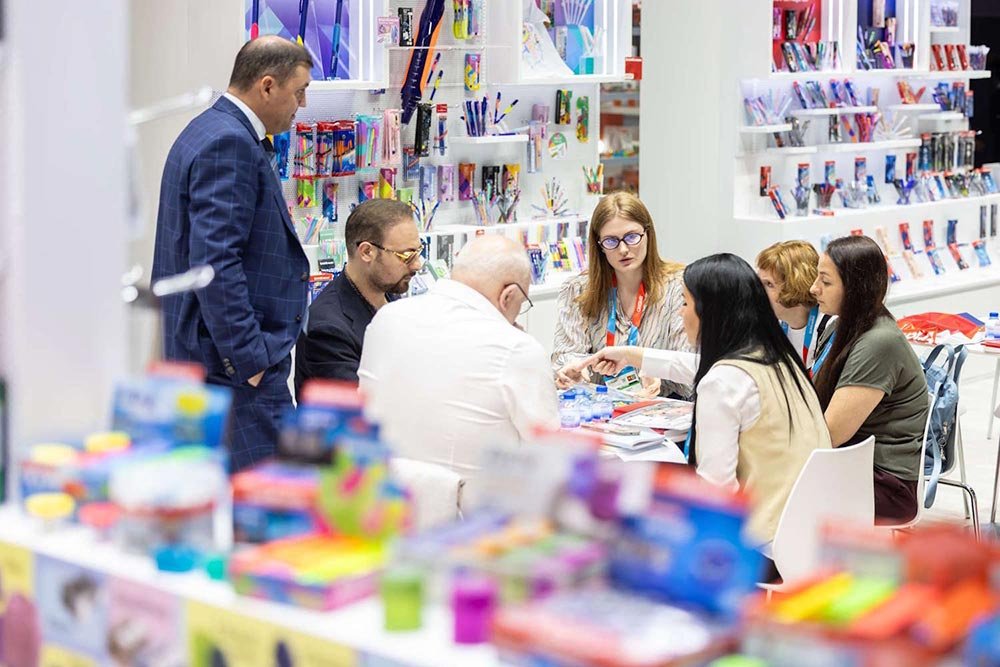
As the industry responds to these changing priorities, the 15th edition of Paperworld Middle East will bring together the international paper and stationery community across paper and paper products, office supplies, stationery supplies, digital stationery, school supplies, teaching and learning materials and classroom equipment, hobby, craft and art supplies, paper processing machinery and controls, gifting and lifestyle products. By bringing these categories together under one platform, the exhibition will enable buyers and suppliers to compare products and capabilities, explore new approaches to sustainability and innovation, strengthen supply chains and build the partnerships needed to respond to an evolving market
This October, Paperorld Middle East will connect international manufacturers and suppliers with distributors, wholesalers, retailers and procurement professionals, providing a dedicated environment to assess new ranges, compare sourcing options and establish long-term commercial partnerships.